
It’s 2026, and yet only about 4% of Indians have personal health insurance.
When I speak to clients, I often hear the same question:
“Why should I buy health insurance? Insurance companies reject so many claims. Wouldn’t it be better to save and invest that money instead?”
It’s a valid question.
Many people have lost trust in health insurance.
Just spend a few minutes on social media, and you’ll come across stories of:
- Claims being rejected after years of paying premiums.
- Hospitals initially approving cashless treatment but later denying it.
- Insurers asking for medical records from many years ago.
- Insurers deducting huge sums from reimbursement claims.
These stories are real, and they shouldn’t be ignored.
But there’s another side that doesn’t get talked about enough.
In FY 2025, insurance companies paid nearly ₹32,000 crore through 62 lakh health insurance claims. Most leading insurers also have a claim settlement ratio of over 90%, which means the majority of claims are successfully paid.
So yes, claim problems do exist. But millions of claims are also settled every year.
The difference is simple: bad news spreads much faster than good news.
Why do claim issues happen?
From my experience, most claim problems happen for three reasons:
- The advisor disappears after selling the policy, or the policy is bought online.
- The buyer doesn’t fully understand the policy or fails to disclose important health information.
- The insurer finds gaps in the information and uses them to reject or reduce the claim.
The good news is that the first two problems can usually be avoided with the right guidance from the beginning. And when the third situation arises, having a knowledgeable advisor can make a big difference.
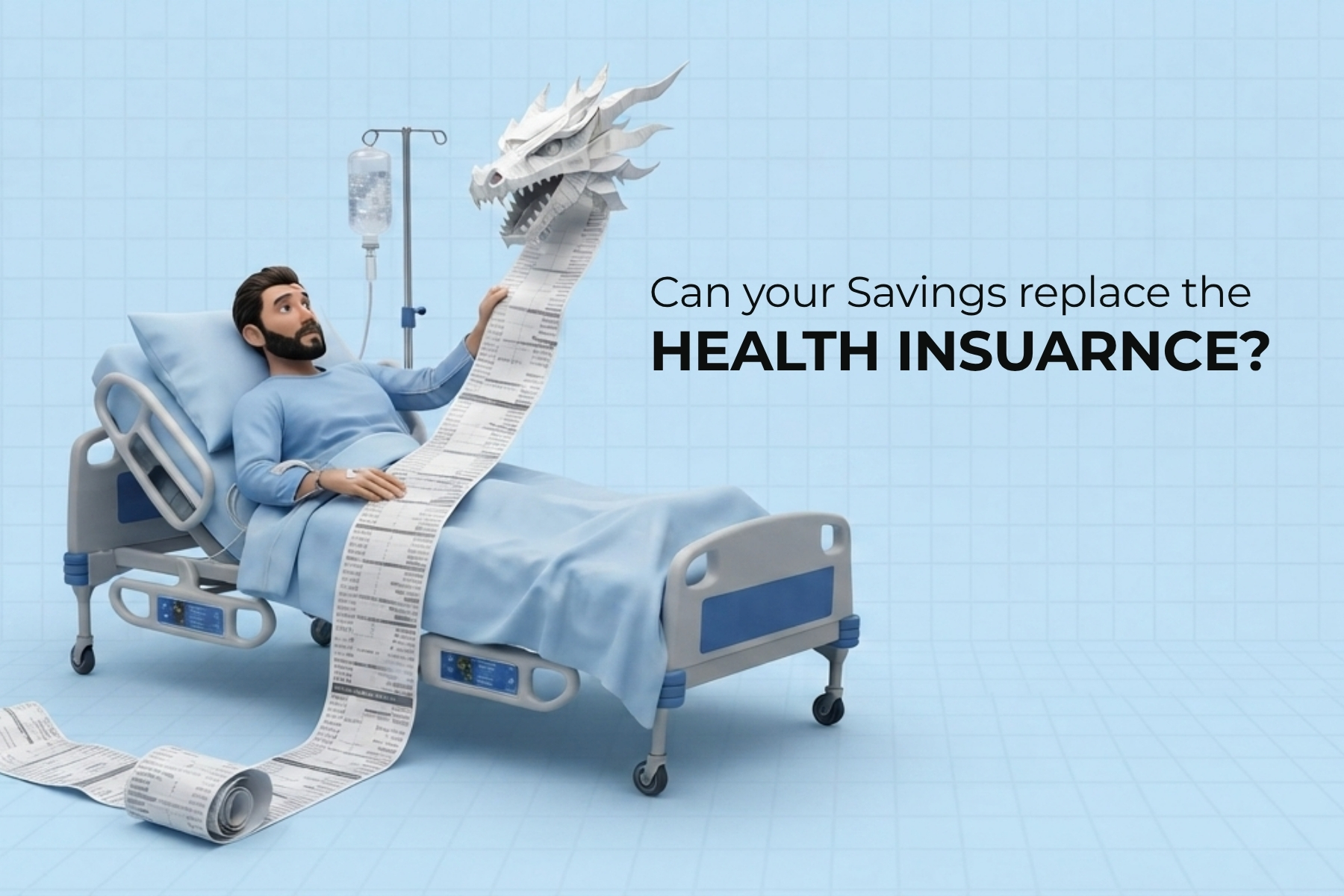
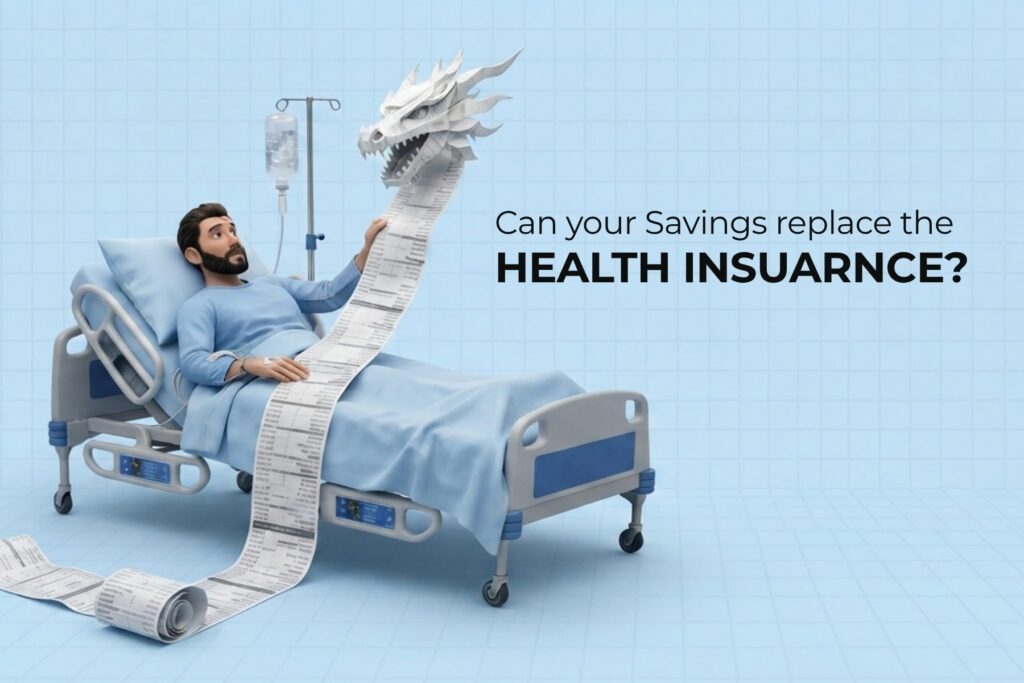
Can your savings replace health insurance?
Many people think they can simply invest the premium amount instead of buying insurance.
It sounds reasonable at first, but the two are very different.
Your savings have a limit.
If you need a large amount for a serious illness, that money is gone.
Health insurance works differently.
Suppose you have a ₹30 lakh health insurance cover.
You get ₹30 lakh of protection this year.
Next year, your cover is ₹30 lakh again.
The year after that, it’s still ₹30 lakh.
This continues year after year as long as the policy remains active. After the waiting periods are over, insurers generally cannot cancel your policy unless there is proven fraud. Many good policies even restore your cover within the same year if a large claim uses up the entire insured amount.
Your personal savings simply cannot offer this kind of protection.
Let’s look at the numbers
Assume you’re 35 years old. Having a family of 4.
A good health insurance policy costs around ₹40,000 per year, and the premium increases by 10% every year.
Now imagine you don’t buy insurance. Instead, you invest the same amount and earn 12% annual returns.
After 30 years, you would build a corpus of approximately ₹2.66 crore.
That sounds impressive.
Now compare it with healthcare costs.
Assume your family face:
- Two major surgeries
- Five average hospitalisations
After accounting for medical inflation, your total medical expenses over those 30 years could reach around ₹3.84 crore—and that’s based on fairly conservative assumptions.
In other words, your savings may still fall short.
Even one illness can be expensive
Consider today’s treatment costs:
- A heart transplant can cost around ₹25 lakh.
- Cancer treatment can easily cost ₹20 lakh or more.
Just one or two major medical events can significantly reduce your savings, especially if they happen early in life.
And healthcare costs are only going up because of:
- Rising pollution
- Sedentary lifestyles
- High stress levels
- Medical inflation of around 14–20% every year
This means future treatment costs are likely to be much higher than they are today.
The bottom line
Health insurance is not perfect.
The industry has its flaws, and claim disputes do happen.
But avoiding health insurance altogether is not the answer.
The better approach is to buy the right policy and buy it the right way.
That means:
- Choosing a trusted advisor who supports you in difficult times.
- Treating health insurance as a long-term financial decision, not just a tax-saving purchase.
- Selecting an insurer based on its claim experience and service quality, not just advertisements.
- Reading and understanding the policy terms before buying.
If you still choose to depend only on your savings, understand the trade-off.
Health insurance gives you a renewable financial safety-net every year.
Savings give you a limited pool of money that reduces every time you use it.
Insurance spreads the financial risk.
Savings leave the entire burden on you.
At the end of the day, this isn’t about opinions.
It’s about numbers. And those numbers remain the same, regardless of how we feel about health insurance.